

Although Q1 typically represents only about 15% of annual activity in the Muskoka residential market, it often sets the tone for the rest of the year. This year, those signals are worth paying attention to.
Despite another significant winter, residential activity held largely consistent with the past three years, still below pandemic peaks, but given the conditions, that consistency is worth noting.
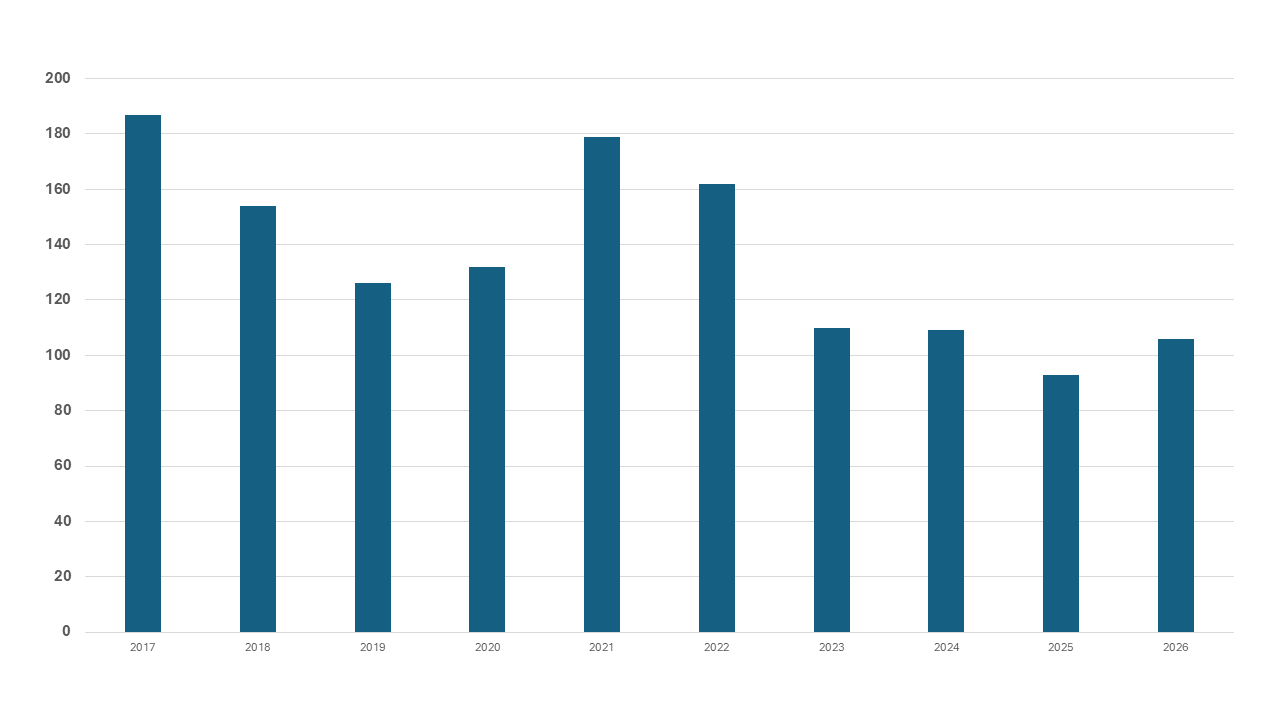
The market has become unforgiving of overpricing, and that makes an honest comparative market analysis the first and most important step in any listing. During the pandemic, urgency and cheap money did the heavy lifting. Buyers moved fast and paid up. Today, buyers are patient and restricted by rates, and price gives a property its fighting chance.
Affordability affects sales. Not exactly a revelation. But what is worth noting is that buyers haven't left the market, they've been waiting for it to come to them. Three years of below-average sales volume doesn't just represent lost activity, it represents accumulated demand that hasn't gone anywhere.
That doesn't mean sellers need to give their properties away. This isn't a fire sale market. What it does mean is that pricing needs to be grounded in an honest read of where a property sits relative to others in its price range and how active that segment of the market actually is. Realistic doesn't mean low. It means supported by the data.
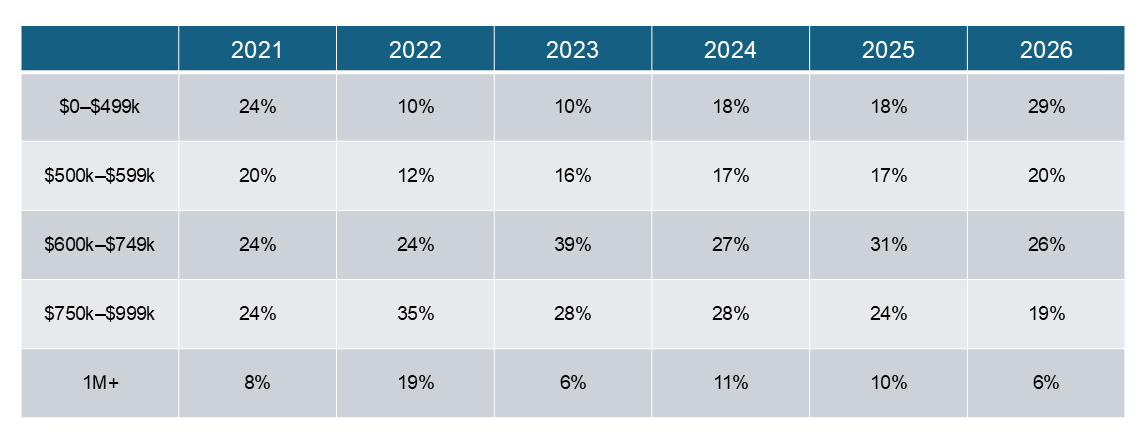
Properties under $500,000 led all segments, accounting for 29% of sales, the first time this price range has topped the market since 2020. Sales above $1 million, meanwhile, fell to their lowest point in the same period. As prices have come down, more properties have moved into reach and buyers have responded.
There's another dynamic worth understanding here. Higher-priced properties tend to carry more pricing risk in a market like this, and it comes down to simple math. The buyer pool shrinks significantly as price points rise. A property priced aggressively at $600,000 might still find its buyer. The same approach at $1.5 million leaves very little margin for error. Fewer qualified buyers at those price points means an overpriced listing doesn't just sit longer, it requires more price adjustments to regain traction. In a market with downward pricing pressure, every week spent chasing the market is a week of lost ground. Sellers who price correctly from the start typically net more than those who start high and follow the market down.
Average and median prices declined 8.7% and 12% respectively versus Q1 last year. But perhaps the more interesting number is this: activity held steady while prices fell. Demand didn't disappear. It was waiting for the right number.
As of the end of March, there were 190 active residential listings against 30 sales, an absorption rate of roughly 16% or about six months of inventory. That sits in balanced-to-soft territory. Buyers have choice and aren't in a rush, which circles back to the same point. With five out of every six listings not selling in a given month, the properties that are moving are almost certainly the ones priced to reflect where the market actually is. That's actually encouraging news for sellers. Demand is real, buyers are active, and a well-priced property isn't waiting forever — it's finding its buyer.
A Word About Interest Rates
This is all happening against a backdrop of mortgage rates that have settled into a new normal. The 2-3% rates of the pandemic era are gone, and 5-6% is where buyers are doing their math today. That's not a small difference — on a $500,000 mortgage it translates to hundreds of dollars more per month, which meaningfully narrows what buyers can qualify for and what they're willing to commit to. Rates haven't moved. Seller pricing has. As properties have come down to where that math finally works, buyers who had been sitting on the sidelines are starting to re-engage.
Over the past year, a lot of buyers have been sitting on the sidelines, waiting for prices to better reflect value. That's starting to happen, and they're starting to move. Properties priced for today's market are selling. Those that aren't are sitting.
Whether Q1 is a preview of the full year really comes down to how sellers respond to that. The buyers are there. Pricing will determine whether they act.
For Sellers: Pricing has never mattered more. The market is responding to value, and how a property is positioned will largely determine the outcome. And for those in higher price ranges, the stakes are even higher. A smaller buyer pool means less room to course correct.
For Buyers: Improving affordability and shifting inventory are creating real entry points that simply weren't there a year ago.
The Muskoka market isn't stalled. It's finding its footing, and Q1 suggest that process is already underway.
Posted by Royal LePage Lakes of Muskoka onEnjoy this blog post? Click here to subscribe for updates
Leave A Comment